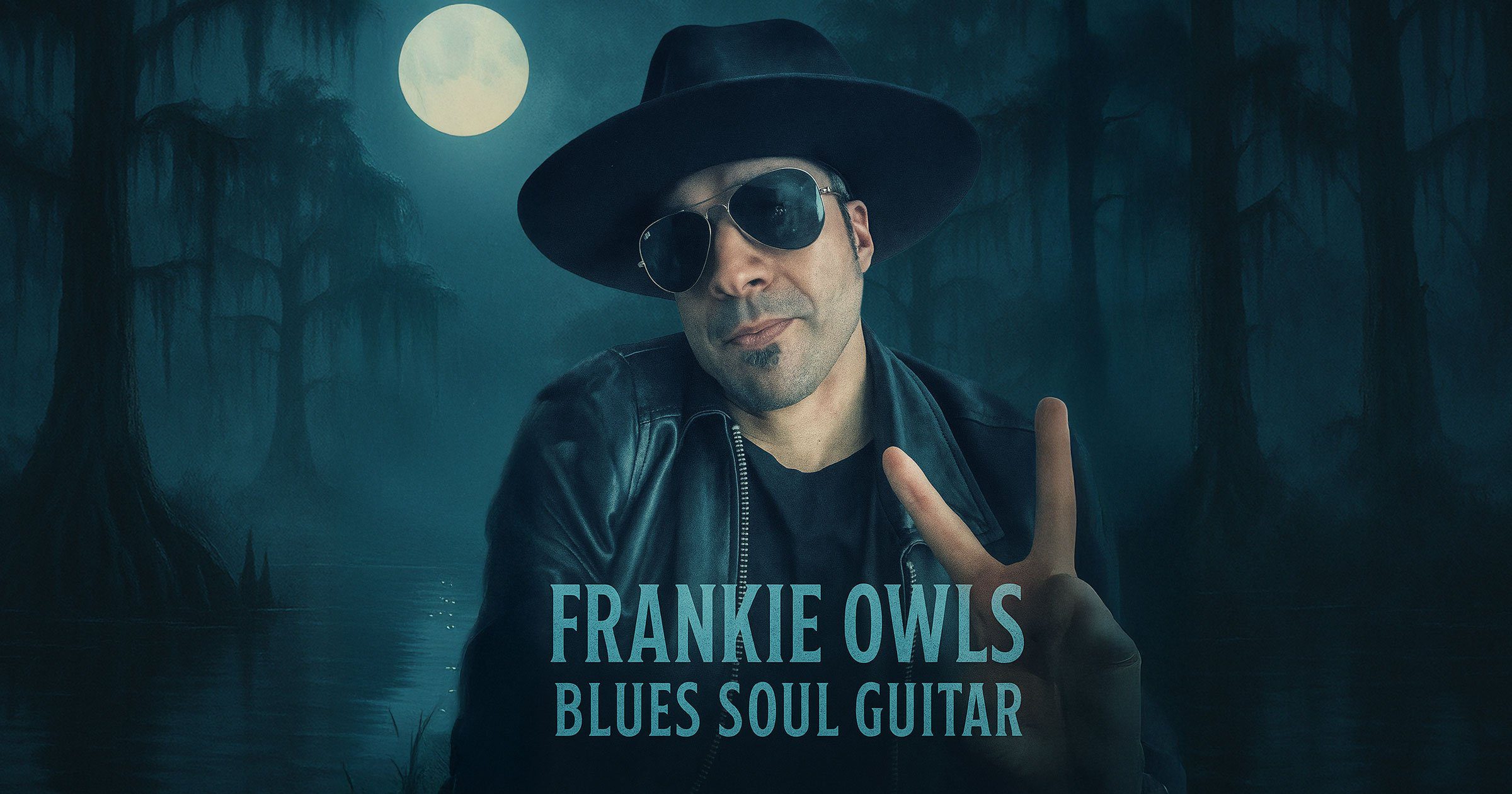
American Blues Guitarist in Germany – Frankie Owls Keeping the Blues Alive
Delta blues, slide guitar and the Stuttgart blues scene from an American blues guitarist in Germany. The blues was never
By Frankie Owls | Blues Guitarist in Germany
Some blues songs make you dance. This one makes you stop and listen.
Blind Willie Johnson’s “The Soul of a Man” (often called “What Is the Soul of a Man”) feels less like a song and more like a question carved into wax — a man talking straight to God through steel strings.
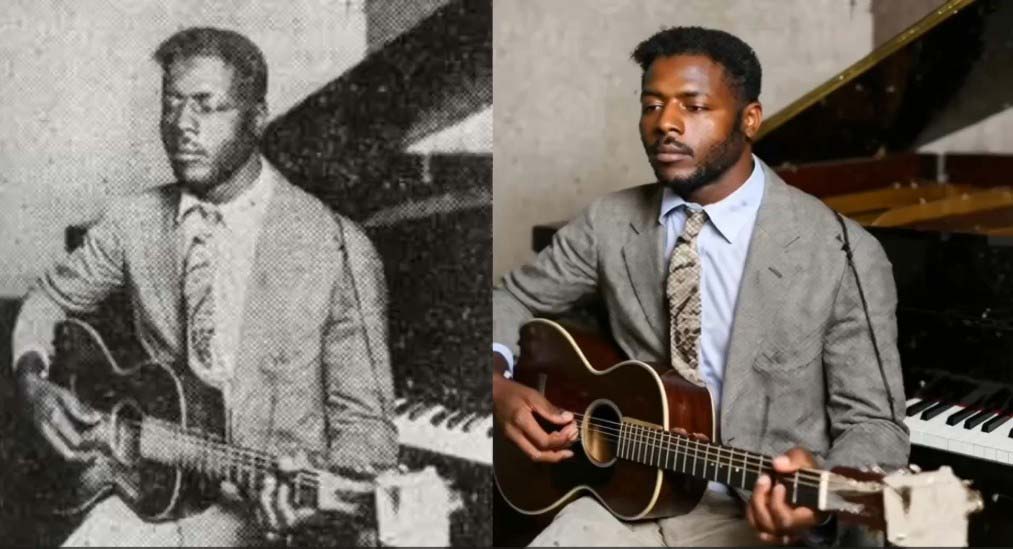
Born in 1897 near Pendleton, Texas, Blind Willie Johnson lost his sight as a child.
His first wife, Angeline Johnson, later told that his stepmother threw lye water in his face during a family dispute — a story later documented by blues historian Samuel Charters.
However it happened, he was blind early in life and turned to singing, preaching, and slide guitar on the streets and in the churchyards of Texas.
Between 1927 and 1930, he recorded about 30 sides for Columbia Records — raw, powerful songs that combined gospel messages with Delta blues form.
His voice was a rough, sermon-like growl, and his guitar sang like a human voice, often played with a knife or steel bar slide instead of glass.
It was the sound of the sacred and the human mixed into one.
This was one of his final sessions for Columbia Records, coming just before the Great Depression forced the label to shut down most of its field-recording operations.
The Atlanta recordings were part of a larger tradition that began a few years earlier in Dallas, Texas (1927–1929), when Columbia’s Frank B. Walker led traveling crews through the South to capture local musicians where they lived.
Historians believe those earlier Dallas sessions — which produced classics like “Dark Was the Night – Cold Was the Ground” and “If I Had My Way” — took place at the Jefferson Hotel, where radio station WRR had installed a studio. It’s the strongest evidence we have of Columbia’s mobile recording method: bring the studio to the blues, not the blues to the studio.
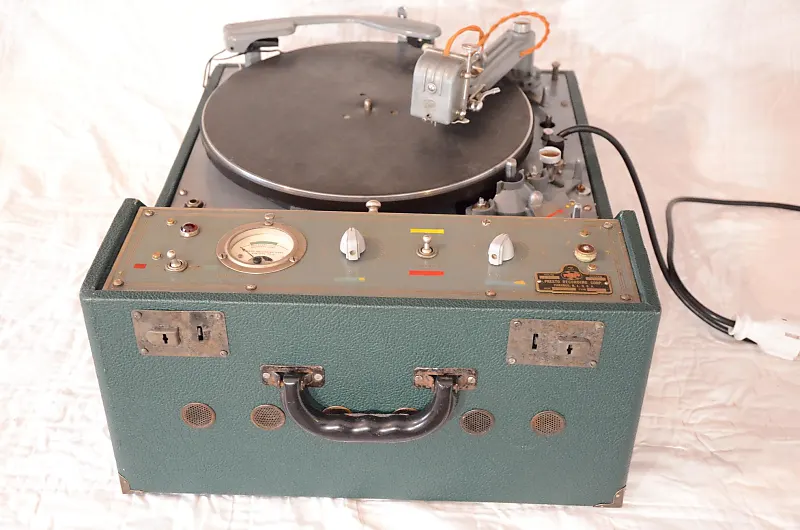
In the late 1920s and early 1930s, Columbia sent portable recording engineers across the South. Led by Frank Walker, these crews would rent hotel rooms or warehouses, hang blankets on the walls, and set up direct-to-disc lathes that cut grooves into wax masters in real time.
Everything was recorded live — no overdubs, no mixing. If a take went bad, the engineer scraped the wax clean and started again. What survived on the disc was a single, unedited performance: one microphone, one voice, one truth.
I haven’t found any documentation naming the exact equipment Columbia used when they recorded Blind Willie Johnson in Atlanta, but surviving Presto portables from the early 1930s — such as the J-10 and K-10 — show the kind of machines these engineers relied on before magnetic tape existed. Rugged and mechanical, they translated sound directly into physical grooves as the performance happened.
That’s why “The Soul of a Man” feels so immediate — you can hear the room’s echo, the shimmer of the slide, and the soft answering harmonies of Willie B. Harris. The recording, remastered on The Complete Blind Willie Johnson (Columbia Legacy C2K 52835), still carries that living, breathing energy.
The liner notes describe it perfectly: “Johnson’s typical bottleneck guitar, supporting his rasping sermon-voice and the answering harmony of Willie B. Harris.” That glide between notes — impossible to achieve with fretted playing — confirms his slide technique, most likely using a knife or metal blade.
Similar portable setups were documented elsewhere, such as the 1929-30 St. James Hotel sessions in Knoxville, where engineers turned hotel rooms into makeshift studios. These were the same kind of rooms, the same kind of machines, and the same kind of ghosts that captured Blind Willie’s voice in Atlanta that spring.
“I want somebody to tell me, just what is the soul of a man?”
Blind Willie Johnson didn’t just sing this line — he demanded an answer.
He wasn’t preaching from a pulpit; he was asking from experience, in a voice rough as pine bark.
It was 1930, the world was falling apart, and the blues had become a way to reach for meaning when the rest of life didn’t make sense.
When he sang that question into Columbia’s single microphone, it wasn’t just a spiritual cry — it was a philosophical one.
The song blurs the line between gospel and blues, sacred and sorrowful.
It’s a man caught between earth and heaven, looking for proof that his soul still matters.
There had been earlier spirituals and hymns that touched on similar ideas — songs like “Soul of Man” and “Where Shall I Be When the First Trumpet Sounds” from the late 1800s.
But none of them used this exact title or Blind Willie’s stark, personal phrasing.
He didn’t borrow; he transformed — taking the old gospel question of salvation and turning it into a bluesman’s search for truth.
Blind Willie Johnson didn’t just sing this line — he demanded an answer.He wasn’t preaching from a pulpit; he was asking from experience, in a voice rough as pine bark.It was 1930, the world was falling apart, and the blues had become a way to reach for meaning when the rest of life didn’t make sense.When he sang that question into Columbia’s single microphone, it wasn’t just a spiritual cry — it was a philosophical one. The song blurs the line between gospel and blues, sacred and sorrowful. It’s a man caught between earth and heaven, looking for proof that his soul still matters.There had been earlier spirituals and hymns that touched on similar ideas — songs like “Soul of Man” and “Where Shall I Be When the First Trumpet Sounds” from the late 1800s. But none of them used this exact title or Blind Willie’s stark, personal phrasing.He didn’t borrow; he transformed — taking the old gospel question of salvation and turning it into a bluesman’s search for truth.
That metal-on-steel slide — likely a pocketknife or a piece of metal — moves like another voice, moaning right alongside him.
Johnson’s phrasing is slow and deliberate, letting every note hang in the air before it resolves.
It’s slide guitar as prayer, raw and unfiltered, paired with Willie B. Harris’s gentle harmonies that lift the song toward the heavens.
Long before recording machines rolled into Texas and Mississippi, the bluesmen of the South were already bending notes the way the human voice bends a prayer.
No one knows exactly who did it first, but the idea most likely came from the bottleneck tradition — players breaking the neck off a glass bottle and slipping it over a finger to make their guitars cry like a singer.
Some used pocketknives, bones, glass bottlenecks, or even lipstick covers — anything smooth that could glide across the strings.
According to music historian Debra Devi in American Blues Scene, slide guitarists in the early 1900s were “using whatever everyday object they could find to make the guitar talk.”
One of the earliest written accounts of slide guitar comes from W.C. Handy, who recalled hearing a man play with a knife in a Mississippi train station in 1895 — “pressing a knife on the strings to make them sing.”
That moment would echo through every Delta juke joint, gospel hall, and back porch for decades to come.
By sliding instead of fretting, players could reach the notes between notes — those vocal-like wails that carried over from African musical scales and one-string instruments like the diddley bow.
It was a way of making the guitar speak — bending, sighing, and weeping like a human voice.
They weren’t chasing perfection. They were chasing feeling.
And that’s what Blind Willie Johnson embodied.
His guitar wasn’t just an instrument — it was a second voice, forged from faith, steel, and soul.
Every glide across the strings feels like a heartbeat turned into sound, every moan like a prayer cut straight into wax.
This is what sets Blind Willie apart from other bluesmen of his time.
He wasn’t singing about heartbreak or whiskey; he was singing about faith and fire.
He took the same slide others used for Saturday-night songs and turned it into something sacred — a call to something higher.
I’m Frankie Owls, a blues guitarist living in Germany, and the first time I heard “The Soul of a Man”, it hit me like lightning.
It wasn’t the lyrics that got me first — it was that tone. The scrape of the slide, the breath between words, that sense that he meant every line.
No tricks, no polish — just truth.
When I recorded my own version, I wanted to keep that same honesty.
So I cut a quick, stripped-down take of “The Soul of a Man”, just guitar and voice, live in one pass — the way Blind Willie did it back in 1930.
But I also wanted to show how that old soul still lives in modern sound.
So I grabbed my Leo Guitars Telecaster and played a slide blues piece inspired by Blind Willie’s spirit — that same call-and-response between metal and emotion, but through the growl of an electric tone built right here in Germany.
That’s the beauty of blues to me — it’s timeless.
The tools change, but the feeling doesn’t.
It’s still about chasing that one note that feels like home — that sound that tells the truth better than words ever could.
Although Blind Willie Johnson died in Beaumont, Texas, in 1945 with little recognition, his voice carried further than anyone could have imagined.
Artists from Mavis Staples to Eric Burdon, Bruce Cockburn, and Chris Thomas King have covered “The Soul of a Man,” each trying to touch that same raw, spiritual fire.
And then there’s Larkin Poe — two sisters from Georgia who have carried that slide-guitar gospel into the modern age.
Their version of “The Soul of a Man” hits with fire and finesse, driven by heavy slide and a deep respect for where it all came from.
They’re proof that the blues never dies — it just changes hands, generation to generation, from the dusty streets of Texas to today’s stages and studios.
But perhaps the most poetic tribute came decades earlier, in 1977, when NASA launched the Voyager Golden Record into space — a message from Earth meant to last forever.
Alongside greetings in 55 languages, whale songs, and Beethoven’s Cavatina, sits a single wordless blues:
Blind Willie Johnson’s “Dark Was the Night – Cold Was the Ground.”
That song, recorded years earlier in Dallas with the same kind of field setup, represents human suffering and hope.
It’s the sound NASA scientists chose to carry beyond the solar system — the sound of faith, pain, and beauty, all in one man’s voice.
So somewhere out there, drifting past the stars, Blind Willie Johnson’s slide guitar is still singing.
And maybe that’s the closest we’ll ever get to answering his question: what is the soul of a man?
Frankie Owls is a blues and soul guitarist based in Germany, keeping the roots of Delta and gospel blues alive for a new generation.
His performances blend the warmth of vintage slide guitar with the honesty of street-corner storytelling — always captured live on video, raw and unfiltered.
From slow Mississippi grooves to gospel-inspired moments, Frankie brings the old sound into today’s world with one-take performance videos that feel as real as they sound.
He performs both acoustic and electric, often using his Leo Guitars Telecaster, letting that steel and soul speak through every note.
Follow Frankie Owls across YouTube, Instagram, and SoundCloud to watch his slide blues videos, live performances, and modern tributes to Blind Willie Johnson, Son House, and the deep gospel blues tradition.
Charters, Samuel. The Country Blues. Da Capo Press, 1959.
Early field documentation of Delta and gospel-blues artists.
Da Capo Press listing
Oliver, Paul. Blues Fell This Morning: Meaning in the Blues. Cambridge University Press, 1960.
Cambridge University Press page
Evans, David. Big Road Blues: Tradition and Creativity in the Folk Blues. Da Capo Press, 1982.
Google Books listing
Devi, Debra. “Language of the Blues: How Bottlenecks, Knives and Bones Shaped Slide Guitar.” American Blues Scene, June 2025.
Read article on American Blues Scene
Handy, W.C. Father of the Blues: An Autobiography. Macmillan, 1941.
Archive.org edition
Columbia Records / Legacy Recordings. The Complete Blind Willie Johnson (Columbia Legacy C2K 52835), 1993.
Legacy Recordings official site
Corcoran, Michael. “Where Blind Willie Johnson, Washington Phillips, and Lillian Glinn Recorded in Dallas.” Texas Monthly / Gospel Blues Blog, 2016.
Read on Texas Monthly
Everett, Matthew. “The Knoxville Sessions: An Introduction to the St. James Hotel Recordings of 1929–30.” The Knoxville Mercury, May 4, 2016.
Read the article
NASA / Sagan, Carl et al. The Voyager Golden Record (NASA JPL, 1977).
NASA Voyager Mission Page
Delta blues, slide guitar and the Stuttgart blues scene from an American blues guitarist in Germany. The blues was never

Damit diese Website reibungslos und mit Soul läuft, verwenden wir einige Cookies.
Einige sind notwendig, andere helfen mir zu verstehen, wie Menschen meine Musik und Videos finden.
Du kannst alle Cookies akzeptieren, deine Auswahl verwalten oder ablehnen – ganz wie du willst.
Mehr Infos in der Datenschutzerklärung
To keep this website running smooth and soulful, we use a few cookies.
Some are essential, others help me understand how folks find my music and videos.
You can accept all cookies, manage your choices, or say no — it’s all good.
More info / Mehr Infos: Privacy Policy